
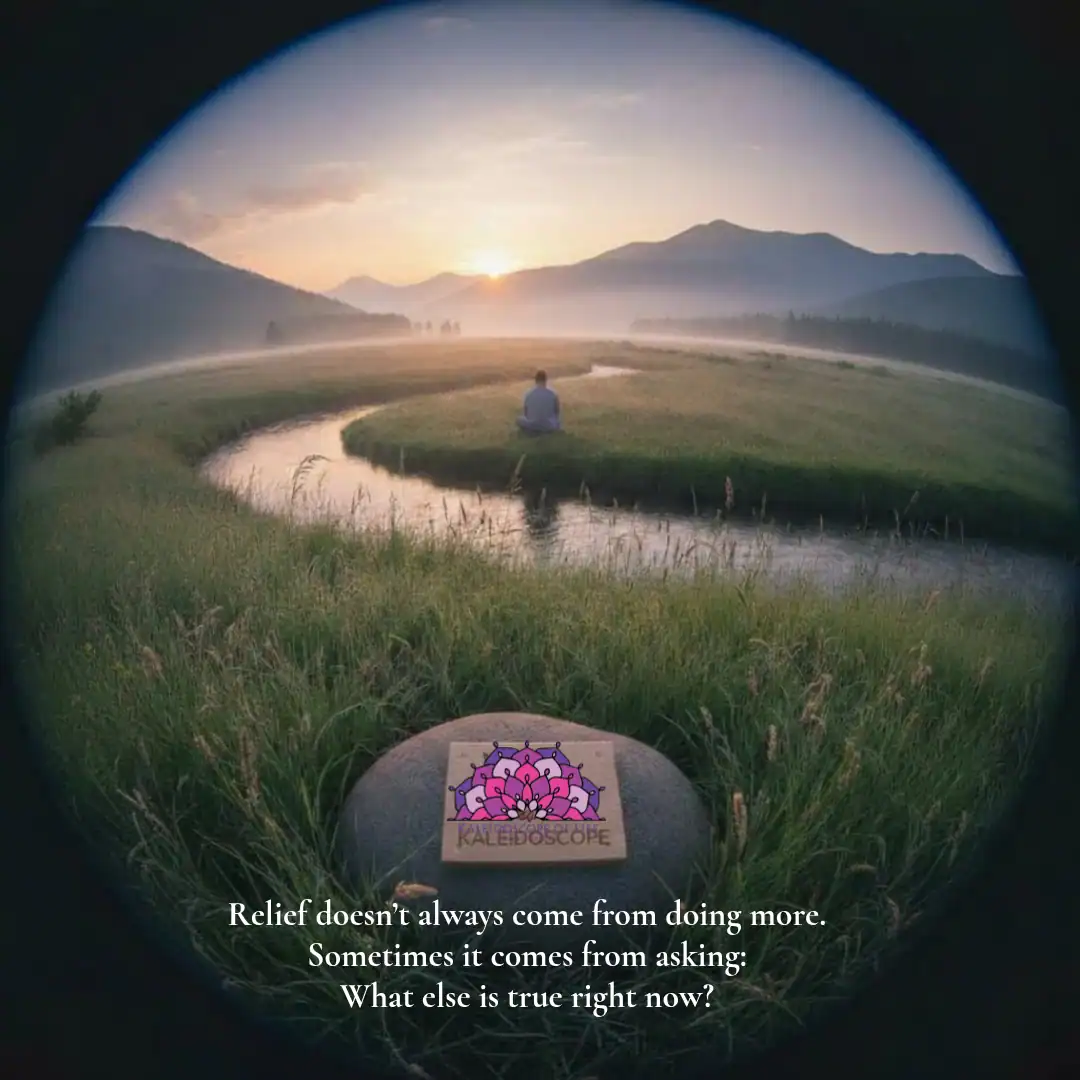
Recently, I had a beautiful conversation with one of my friends and a fellow coach. We’ve covered a few topics and I’d love to share one of them with you right now. A little observation we both have notice in people around us. It’s when we’re having a regular conversation but in the middle of it, something slowly creeps in. It’s the following:
There’s a moment many high achievers recognize—usually quietly, and often mid-conversation.
You’re doing “fine.”
Life looks full.
You’re responsible, capable, moving forward in many ways.
And yet… something inside feels narrow.
Not wrong. Not broken. Just… smaller than it used to be.
That narrowing is slow. It can show up as:
- impatience with people you normally handle with ease
- cynicism you don’t recognize as yours
- distrust of support (even when it’s offered freely)
- urgency that makes everything feel heavy
- a sense that you’re carrying life alone, even when you’re surrounded by others
In coaching, I hear this pattern constantly.
And I’ve noticed something important:
When we’re stressed, we narrow our lens.
When we feel safe, we widen it.
Pace matters more than pressure
High achievers often confuse speed with progress.
But real change doesn’t respond to pressure.
It responds to integration.
If someone moves faster than your nervous system can handle—your mind will rebel, your body will tighten, and you’ll either stall or sabotage.
A grounded approach sounds like:
- “One step at a time.”
- “Help me build capacity.”
- “Let’s go at a pace I can sustain.”
That’s not weakness.
That’s wisdom.
Live today like it’s your first day
You’ve probably heard: “Live like it’s your last day.”
Some people find that energizing. Others feel it creates urgency and desperation.
There’s another way to hold it:
Live like it’s your first day.
What if today is a fresh start?
Not to prove anything—
but to notice what’s here, choose who you want to be, and respond with intention.
Because we don’t control much.
But we do have influence over:
- how we show up
- how we speak
- how we look at things
- how we accept support
- how we rebuild connection
And that’s enough to change a life.
A gentle reflection
If you feel limited right now, try one of these today:
- Ask: What else is true?
- Reach out to one person you trust: “Want to catch up for 10 minutes?”
- Notice where you resist receiving, and ask: “What feels unsafe about this?”
- Choose one small act of neighbor-level community: help, check-in, kindness.
- Slow your pace down to what your body can actually sustain.
Not dramatic.
Just true.
And that’s where real transformation begins.
Now let’s have a look on how stress makes us shrink
Stress is a survival strategy. It focuses us. It helps us “get through.”
But long-term stress has a cost.
It turns the world into a tight hallway:
- my goals
- my tasks
- my problems
- my control
We stop seeing context. We stop seeing people. We stop seeing options.
And then, without meaning to, we start reacting from a smaller self.
Not because we’re immature.
Because we’re overloaded.
Widening the lens is a skill
Widening your lens isn’t toxic positivity. It’s not pretending something isn’t happening.
It’s the practice of asking:
What else is true right now?
That one question changes the nervous system.
You can disagree with someone and still hold complexity.
You can feel disappointed and still remember what you value.
You can want more results and still recognize what you’ve already built.
This is emotional maturity. And it’s trainable.
The “two truths” practice
A powerful widening move is learning to hold two truths at once.
Example:
- “I strongly disagree with what they’re doing or saying right now.”
- “I can still recognize the good they’ve contributed, or the humanity underneath.”
This isn’t about excusing behavior.
It’s about staying free inside yourself.
When we can hold two truths, we stop being governed by reactivity.
We choose our response.
Curiosity is how we stay human
Curiosity is a quiet superpower—especially now.
Instead of collapsing into labels (“he’s an idiot,” “they’re terrible,” “people are hopeless”), curiosity asks:
- “How did they get there?”
- “What experience shaped this?”
- “What am I not seeing?”
- “What’s mine to control, and what isn’t?”
Curiosity creates room for conversation, not combat.
It doesn’t weaken your standards. It strengthens your steadiness.
Stay curious. Connect with people. Expand from within.
Are you ready? Let’s start here.